Buy free-bitcoin.eu ?
We are moving the project
free-bitcoin.eu .
Are you interested in purchasing the domain
free-bitcoin.eu ?
domain@kv-gmbh.de · 0541-91531010
Buy free-bitcoin.eu ?
What does adiabatic dry, adiabatic moist, and adiabatic mean?
Adiabatic dry refers to the process of air cooling or warming without any exchange of heat with its surroundings. Adiabatic moist refers to the same process, but with the presence of water vapor in the air. Adiabatic, in general, means a process that occurs without any heat transfer between the system and its surroundings. These terms are commonly used in meteorology to describe the cooling or warming of air as it rises or descends in the atmosphere. **
What is the dry adiabatic and moist adiabatic temperature gradient?
The dry adiabatic temperature gradient is the rate at which the temperature of a parcel of dry air changes as it rises or descends in the atmosphere without exchanging heat with its surroundings. It is approximately 9.8°C per kilometer. The moist adiabatic temperature gradient, on the other hand, is the rate at which the temperature of a parcel of moist air changes as it rises or descends in the atmosphere while undergoing condensation or evaporation. It is approximately 5-6°C per kilometer. The difference in these gradients is due to the fact that latent heat is released or absorbed during the phase change of water vapor in the atmosphere, affecting the rate at which the temperature changes with altitude. **

Similar search terms for Adiabatic
Top-Angebote
Products related to Adiabatic:
-
Arlo VMS3130 Wire-Free HD 720p Wi-Fi Security System - 1 CameraThe Arlo VMS3130 is a wire-free HD security camera system designed to provide flexible indoor and outdoor home monitoring without requiring a power cable to the camera. The system includes one HD camera, an Arlo base station, magnetic mounting hardware and the batteries required for operation. The camera records video at up to 1280 x 720 HD resolution and uses a CMOS image sensor to provide clear monitoring for everyday security needs. Its 110-degree field of view covers a wide area, while digital pan and zoom allow you to inspect parts of the captured view. Built-in infrared night vision allows the camera to monitor areas in low-light and complete darkness, with night vision reaching up to approximately 7.6 metres. An automatic IR cut filter switches between day and night operation according to the surrounding light conditions. The integrated motion detection system can detect movement and trigger notifications, helping you stay informed when activity is detected. Adjustable motion sensitivity allows the system to be configured according to the monitoring environment. The camera is completely wire-free and powered by four CR123 lithium batteries. Depending on usage and conditions, the batteries can provide approximately four to six months of operation. A battery-level indicator helps monitor remaining power. The included Arlo base station connects to your existing router using Ethernet and communicates wirelessly with the camera over a 2.4GHz Wi-Fi connection. The system provides a wireless range of up to approximately 91 metres in line-of-sight conditions. The VMS3130 is suitable for indoor and outdoor monitoring and is designed for use in temperatures from -10°C to 50°C. The compact camera can be wall mounted using the supplied magnetic mount and mounting screw. The system can be managed through compatible Arlo applications, with motion alerts and remote access available through a connected device. The original system also includes cloud storage functionality for storing and reviewing recorded footage, subject to the applicable service and account options.270,49 £*Shipping: 0,00 £Secure redirect to the provider



-
What does moist adiabatic mean?
Moist adiabatic refers to the process of air rising and cooling at a constant rate due to expansion, without exchanging heat with its surroundings. This cooling rate is slower than the dry adiabatic lapse rate because the air contains moisture, which releases latent heat as it condenses. The presence of moisture in the air affects how quickly it cools or warms as it rises or descends in the atmosphere. **
-
What does reversible and adiabatic mean?
Reversible refers to a process that can be reversed without any net change in the system or its surroundings. In a reversible process, the system remains in equilibrium with its surroundings at all times. Adiabatic refers to a process in which there is no heat exchange between the system and its surroundings. This means that the change in the system occurs without any heat entering or leaving the system. **
-
What is the difference between moist adiabatic and dry adiabatic, and how do relative humidity and absolute humidity differ?
Moist adiabatic lapse rate refers to the rate at which a parcel of saturated air cools as it rises, while dry adiabatic lapse rate refers to the rate at which a parcel of unsaturated air cools as it rises. Moist adiabatic lapse rate is lower than dry adiabatic lapse rate due to the release of latent heat during condensation. Relative humidity is the ratio of the amount of water vapor present in the air to the maximum amount of water vapor the air can hold at a specific temperature, while absolute humidity is the actual amount of water vapor present in the air regardless of temperature. **
-
What is the difference between adiabatic and isenthalpic?
Adiabatic and isenthalpic processes are both types of thermodynamic processes, but they differ in the specific properties they involve. Adiabatic processes occur without the transfer of heat, meaning there is no heat exchange with the surroundings. Isenthalpic processes, on the other hand, occur at constant enthalpy, meaning the total heat content of the system remains constant. In summary, adiabatic processes involve no heat transfer, while isenthalpic processes involve constant enthalpy. **


What is the work of an adiabatic process?
An adiabatic process is a thermodynamic process in which there is no heat transfer into or out of the system. This means that the change in the system's internal energy is solely due to the work done on or by the system. In an adiabatic expansion, for example, the system does work on its surroundings without any heat being added to the system. This can lead to changes in temperature, pressure, and volume of the system. Adiabatic processes are commonly seen in the expansion or compression of gases. **
How do you calculate the internal energy in adiabatic processes?
In an adiabatic process, there is no heat exchange with the surroundings, so the change in internal energy is solely due to work done on or by the system. The internal energy change in an adiabatic process can be calculated using the first law of thermodynamics, which states that the change in internal energy is equal to the work done on the system. Mathematically, this can be expressed as ΔU = -W, where ΔU is the change in internal energy and W is the work done on the system. Therefore, to calculate the internal energy change in an adiabatic process, one needs to determine the work done on the system. **
Top-Angebote
Products related to Adiabatic:
-
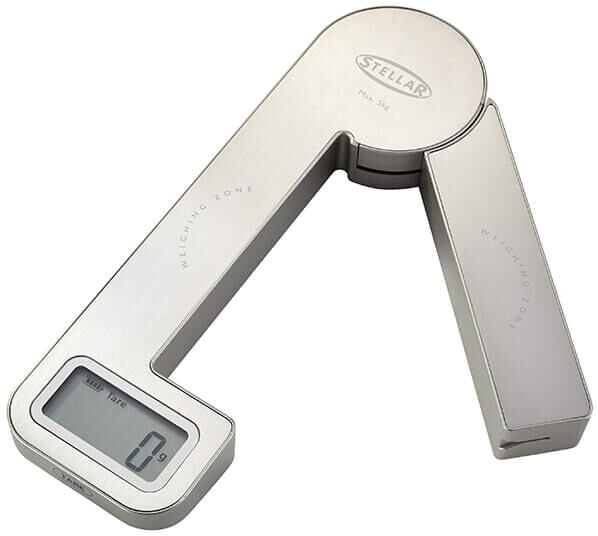
Stellar Battery Free Digital Scale 5kgThis Stellar Kitchen 5kg Battery Free Scale, is a compact design that takes up very little room. Battery free, simply wind up and weigh this scale. Complete with a add-weigh facility, simply reset tare. This scale is suitable for weighing directly or use a bowl of your choice. Select units: g/oz/water-ml/milk-ml. Supplied with a Stellar 2 Year Electrical Guarantee. Dimensions: W6.5cm x H2.5cm x L22cm. Weighs approximately 182g.19,95 £*Shipping: 3,50 £Secure redirect to the provider
-
What does adiabatic dry, adiabatic moist, and adiabatic mean?
Adiabatic dry refers to the process of air cooling or warming without any exchange of heat with its surroundings. Adiabatic moist refers to the same process, but with the presence of water vapor in the air. Adiabatic, in general, means a process that occurs without any heat transfer between the system and its surroundings. These terms are commonly used in meteorology to describe the cooling or warming of air as it rises or descends in the atmosphere. **
-
What is the dry adiabatic and moist adiabatic temperature gradient?
The dry adiabatic temperature gradient is the rate at which the temperature of a parcel of dry air changes as it rises or descends in the atmosphere without exchanging heat with its surroundings. It is approximately 9.8°C per kilometer. The moist adiabatic temperature gradient, on the other hand, is the rate at which the temperature of a parcel of moist air changes as it rises or descends in the atmosphere while undergoing condensation or evaporation. It is approximately 5-6°C per kilometer. The difference in these gradients is due to the fact that latent heat is released or absorbed during the phase change of water vapor in the atmosphere, affecting the rate at which the temperature changes with altitude. **
-
What does moist adiabatic mean?
Moist adiabatic refers to the process of air rising and cooling at a constant rate due to expansion, without exchanging heat with its surroundings. This cooling rate is slower than the dry adiabatic lapse rate because the air contains moisture, which releases latent heat as it condenses. The presence of moisture in the air affects how quickly it cools or warms as it rises or descends in the atmosphere. **
-
What does reversible and adiabatic mean?
Reversible refers to a process that can be reversed without any net change in the system or its surroundings. In a reversible process, the system remains in equilibrium with its surroundings at all times. Adiabatic refers to a process in which there is no heat exchange between the system and its surroundings. This means that the change in the system occurs without any heat entering or leaving the system. **
Similar search terms for Adiabatic
-
Arlo VMS3130 Wire-Free HD 720p Wi-Fi Security System - 1 CameraThe Arlo VMS3130 is a wire-free HD security camera system designed to provide flexible indoor and outdoor home monitoring without requiring a power cable to the camera. The system includes one HD camera, an Arlo base station, magnetic mounting hardware and the batteries required for operation. The camera records video at up to 1280 x 720 HD resolution and uses a CMOS image sensor to provide clear monitoring for everyday security needs. Its 110-degree field of view covers a wide area, while digital pan and zoom allow you to inspect parts of the captured view. Built-in infrared night vision allows the camera to monitor areas in low-light and complete darkness, with night vision reaching up to approximately 7.6 metres. An automatic IR cut filter switches between day and night operation according to the surrounding light conditions. The integrated motion detection system can detect movement and trigger notifications, helping you stay informed when activity is detected. Adjustable motion sensitivity allows the system to be configured according to the monitoring environment. The camera is completely wire-free and powered by four CR123 lithium batteries. Depending on usage and conditions, the batteries can provide approximately four to six months of operation. A battery-level indicator helps monitor remaining power. The included Arlo base station connects to your existing router using Ethernet and communicates wirelessly with the camera over a 2.4GHz Wi-Fi connection. The system provides a wireless range of up to approximately 91 metres in line-of-sight conditions. The VMS3130 is suitable for indoor and outdoor monitoring and is designed for use in temperatures from -10°C to 50°C. The compact camera can be wall mounted using the supplied magnetic mount and mounting screw. The system can be managed through compatible Arlo applications, with motion alerts and remote access available through a connected device. The original system also includes cloud storage functionality for storing and reviewing recorded footage, subject to the applicable service and account options.270,49 £*Shipping: 0,00 £Secure redirect to the provider
-
York Wallcoverings Exchange Crystal Shore WallpaperExchange's small, unique, fractured lines feel like an artisanal installation rendered in burnished metallic against a textural plaster ground, shown in taupe grey with burnished metallic..170,00 $*Shipping: 0,00 $Secure redirect to the provider
-
What is the difference between moist adiabatic and dry adiabatic, and how do relative humidity and absolute humidity differ?
Moist adiabatic lapse rate refers to the rate at which a parcel of saturated air cools as it rises, while dry adiabatic lapse rate refers to the rate at which a parcel of unsaturated air cools as it rises. Moist adiabatic lapse rate is lower than dry adiabatic lapse rate due to the release of latent heat during condensation. Relative humidity is the ratio of the amount of water vapor present in the air to the maximum amount of water vapor the air can hold at a specific temperature, while absolute humidity is the actual amount of water vapor present in the air regardless of temperature. **
-
What is the difference between adiabatic and isenthalpic?
Adiabatic and isenthalpic processes are both types of thermodynamic processes, but they differ in the specific properties they involve. Adiabatic processes occur without the transfer of heat, meaning there is no heat exchange with the surroundings. Isenthalpic processes, on the other hand, occur at constant enthalpy, meaning the total heat content of the system remains constant. In summary, adiabatic processes involve no heat transfer, while isenthalpic processes involve constant enthalpy. **
-
What is the work of an adiabatic process?
An adiabatic process is a thermodynamic process in which there is no heat transfer into or out of the system. This means that the change in the system's internal energy is solely due to the work done on or by the system. In an adiabatic expansion, for example, the system does work on its surroundings without any heat being added to the system. This can lead to changes in temperature, pressure, and volume of the system. Adiabatic processes are commonly seen in the expansion or compression of gases. **
-
How do you calculate the internal energy in adiabatic processes?
In an adiabatic process, there is no heat exchange with the surroundings, so the change in internal energy is solely due to work done on or by the system. The internal energy change in an adiabatic process can be calculated using the first law of thermodynamics, which states that the change in internal energy is equal to the work done on the system. Mathematically, this can be expressed as ΔU = -W, where ΔU is the change in internal energy and W is the work done on the system. Therefore, to calculate the internal energy change in an adiabatic process, one needs to determine the work done on the system. **
* All prices are inclusive of VAT and, if applicable, plus shipping costs. The offer information is based on the details provided by the respective shop and is updated through automated processes. Real-time updates do not occur, so deviations can occur in individual cases. ** Note: Parts of this content were created by AI.