Buy free-bitcoin.eu ?
We are moving the project
free-bitcoin.eu .
Are you interested in purchasing the domain
free-bitcoin.eu ?
domain@kv-gmbh.de · 0541-91531010
Buy free-bitcoin.eu ?
Why does ethane boil at 84 °C and ethane at 88.6 °C?
Ethane (C2H6) boils at a lower temperature of 84 °C compared to ethane (C2H4) at 88.6 °C because ethane has a higher molecular weight and stronger intermolecular forces. The stronger intermolecular forces in ethane require more energy to overcome, resulting in a higher boiling point. Ethane, on the other hand, has weaker intermolecular forces due to its smaller molecular size, leading to a lower boiling point. Therefore, the difference in boiling points between ethane and ethane can be attributed to the differences in their molecular weights and intermolecular forces. **
What possible products or derivatives of ethane are formed in the reaction between ethane and iodine?
In the reaction between ethane and iodine, one possible product that can be formed is diiodoethane (also known as 1,2-diiodoethane). This compound is formed when one iodine atom replaces one of the hydrogen atoms in ethane. Additionally, if the reaction continues, other derivatives such as triiodoethane (also known as 1,1,2-triiodoethane) and tetraiodoethane (also known as 1,1,2,2-tetraiodoethane) can also be formed by further substitution of hydrogen atoms with iodine atoms. **


Similar search terms for Ethane
Top-Angebote
Products related to Ethane:
-
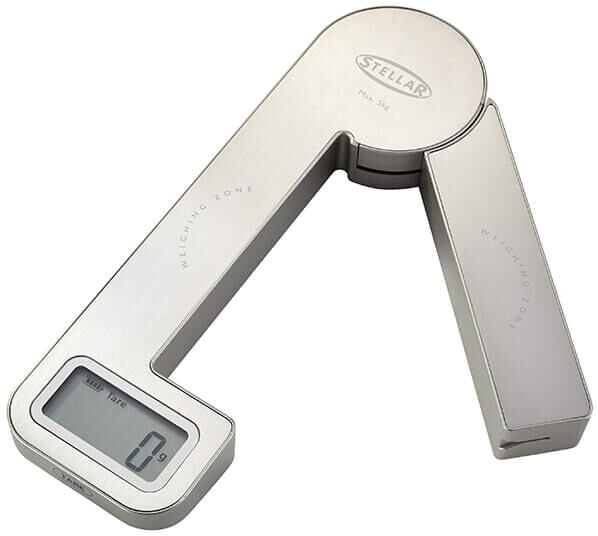
Stellar Battery Free Digital Scale 5kgThis Stellar Kitchen 5kg Battery Free Scale, is a compact design that takes up very little room. Battery free, simply wind up and weigh this scale. Complete with a add-weigh facility, simply reset tare. This scale is suitable for weighing directly or use a bowl of your choice. Select units: g/oz/water-ml/milk-ml. Supplied with a Stellar 2 Year Electrical Guarantee. Dimensions: W6.5cm x H2.5cm x L22cm. Weighs approximately 182g.19,95 £*Shipping: 3,50 £Secure redirect to the provider
-
Arlo VMS3130 Wire-Free HD 720p Wi-Fi Security System - 1 CameraThe Arlo VMS3130 is a wire-free HD security camera system designed to provide flexible indoor and outdoor home monitoring without requiring a power cable to the camera. The system includes one HD camera, an Arlo base station, magnetic mounting hardware and the batteries required for operation. The camera records video at up to 1280 x 720 HD resolution and uses a CMOS image sensor to provide clear monitoring for everyday security needs. Its 110-degree field of view covers a wide area, while digital pan and zoom allow you to inspect parts of the captured view. Built-in infrared night vision allows the camera to monitor areas in low-light and complete darkness, with night vision reaching up to approximately 7.6 metres. An automatic IR cut filter switches between day and night operation according to the surrounding light conditions. The integrated motion detection system can detect movement and trigger notifications, helping you stay informed when activity is detected. Adjustable motion sensitivity allows the system to be configured according to the monitoring environment. The camera is completely wire-free and powered by four CR123 lithium batteries. Depending on usage and conditions, the batteries can provide approximately four to six months of operation. A battery-level indicator helps monitor remaining power. The included Arlo base station connects to your existing router using Ethernet and communicates wirelessly with the camera over a 2.4GHz Wi-Fi connection. The system provides a wireless range of up to approximately 91 metres in line-of-sight conditions. The VMS3130 is suitable for indoor and outdoor monitoring and is designed for use in temperatures from -10°C to 50°C. The compact camera can be wall mounted using the supplied magnetic mount and mounting screw. The system can be managed through compatible Arlo applications, with motion alerts and remote access available through a connected device. The original system also includes cloud storage functionality for storing and reviewing recorded footage, subject to the applicable service and account options.270,49 £*Shipping: 0,00 £Secure redirect to the provider


-
Why is ethanol liquid and ethane gaseous?
Ethanol is a liquid at room temperature because it has stronger intermolecular forces of attraction compared to ethane. Ethanol molecules can form hydrogen bonds with each other, which results in a higher boiling point and a liquid state. On the other hand, ethane molecules are nonpolar and can only experience weaker van der Waals forces, leading to a lower boiling point and a gaseous state at room temperature. **
-
What similarities do ethene and ethane have?
Ethene and ethane are both hydrocarbons, meaning they are composed of carbon and hydrogen atoms. They are both aliphatic compounds, which means they have straight chain structures. Additionally, both ethene and ethane are colorless and odorless gases at room temperature and pressure. **
-
What is the difference between ethane and ethanol?
Ethane is a hydrocarbon with the chemical formula C2H6, while ethanol is an alcohol with the chemical formula C2H5OH. Ethane is a simple alkane, while ethanol is a type of alcohol that contains a hydroxyl group. Ethanol is commonly used as a solvent, fuel, and in alcoholic beverages, while ethane is primarily used as a fuel and in the production of ethylene. **
-
How is the chlorination of ethane carried out?
The chlorination of ethane is carried out by reacting ethane with chlorine gas in the presence of ultraviolet light or heat. This reaction results in the substitution of one or more hydrogen atoms in ethane with chlorine atoms, forming chloroethane and other chlorinated products. The reaction is typically carried out in the gas phase or in the presence of a solvent such as carbon tetrachloride. The process is important for the production of various chlorinated compounds used in the chemical industry. **


How does the complete combustion of ethane occur?
The complete combustion of ethane occurs when it reacts with oxygen in the presence of a flame or spark. The chemical equation for the complete combustion of ethane is: C2H6 + 7/2O2 → 2CO2 + 3H2O. This means that one molecule of ethane reacts with 7/2 molecules of oxygen to produce two molecules of carbon dioxide and three molecules of water. This reaction releases a large amount of heat and light, making it a highly exothermic process. **
How is the bromination of ethane carried out?
The bromination of ethane is carried out by reacting ethane with bromine gas in the presence of a catalyst such as iron or aluminum. The reaction takes place at room temperature and atmospheric pressure. The bromine molecule breaks apart and adds to the carbon-carbon double bond in ethane, resulting in the formation of 1,2-dibromoethane. This reaction is an example of an addition reaction, where the bromine atoms add across the double bond of ethane. **
Top-Angebote
Products related to Ethane:
-
Stellar Battery Free Digital Scale 5kgThis Stellar Kitchen 5kg Battery Free Scale, is a compact design that takes up very little room. Battery free, simply wind up and weigh this scale. Complete with a add-weigh facility, simply reset tare. This scale is suitable for weighing directly or use a bowl of your choice. Select units: g/oz/water-ml/milk-ml. Supplied with a Stellar 2 Year Electrical Guarantee. Dimensions: W6.5cm x H2.5cm x L22cm. Weighs approximately 182g.19,95 £*Shipping: 3,50 £Secure redirect to the provider
-
Why does ethane boil at 84 °C and ethane at 88.6 °C?
Ethane (C2H6) boils at a lower temperature of 84 °C compared to ethane (C2H4) at 88.6 °C because ethane has a higher molecular weight and stronger intermolecular forces. The stronger intermolecular forces in ethane require more energy to overcome, resulting in a higher boiling point. Ethane, on the other hand, has weaker intermolecular forces due to its smaller molecular size, leading to a lower boiling point. Therefore, the difference in boiling points between ethane and ethane can be attributed to the differences in their molecular weights and intermolecular forces. **
-
What possible products or derivatives of ethane are formed in the reaction between ethane and iodine?
In the reaction between ethane and iodine, one possible product that can be formed is diiodoethane (also known as 1,2-diiodoethane). This compound is formed when one iodine atom replaces one of the hydrogen atoms in ethane. Additionally, if the reaction continues, other derivatives such as triiodoethane (also known as 1,1,2-triiodoethane) and tetraiodoethane (also known as 1,1,2,2-tetraiodoethane) can also be formed by further substitution of hydrogen atoms with iodine atoms. **
-
Why is ethanol liquid and ethane gaseous?
Ethanol is a liquid at room temperature because it has stronger intermolecular forces of attraction compared to ethane. Ethanol molecules can form hydrogen bonds with each other, which results in a higher boiling point and a liquid state. On the other hand, ethane molecules are nonpolar and can only experience weaker van der Waals forces, leading to a lower boiling point and a gaseous state at room temperature. **
-
What similarities do ethene and ethane have?
Ethene and ethane are both hydrocarbons, meaning they are composed of carbon and hydrogen atoms. They are both aliphatic compounds, which means they have straight chain structures. Additionally, both ethene and ethane are colorless and odorless gases at room temperature and pressure. **
Similar search terms for Ethane
-
Arlo VMS3130 Wire-Free HD 720p Wi-Fi Security System - 1 CameraThe Arlo VMS3130 is a wire-free HD security camera system designed to provide flexible indoor and outdoor home monitoring without requiring a power cable to the camera. The system includes one HD camera, an Arlo base station, magnetic mounting hardware and the batteries required for operation. The camera records video at up to 1280 x 720 HD resolution and uses a CMOS image sensor to provide clear monitoring for everyday security needs. Its 110-degree field of view covers a wide area, while digital pan and zoom allow you to inspect parts of the captured view. Built-in infrared night vision allows the camera to monitor areas in low-light and complete darkness, with night vision reaching up to approximately 7.6 metres. An automatic IR cut filter switches between day and night operation according to the surrounding light conditions. The integrated motion detection system can detect movement and trigger notifications, helping you stay informed when activity is detected. Adjustable motion sensitivity allows the system to be configured according to the monitoring environment. The camera is completely wire-free and powered by four CR123 lithium batteries. Depending on usage and conditions, the batteries can provide approximately four to six months of operation. A battery-level indicator helps monitor remaining power. The included Arlo base station connects to your existing router using Ethernet and communicates wirelessly with the camera over a 2.4GHz Wi-Fi connection. The system provides a wireless range of up to approximately 91 metres in line-of-sight conditions. The VMS3130 is suitable for indoor and outdoor monitoring and is designed for use in temperatures from -10°C to 50°C. The compact camera can be wall mounted using the supplied magnetic mount and mounting screw. The system can be managed through compatible Arlo applications, with motion alerts and remote access available through a connected device. The original system also includes cloud storage functionality for storing and reviewing recorded footage, subject to the applicable service and account options.270,49 £*Shipping: 0,00 £Secure redirect to the provider
-
What is the difference between ethane and ethanol?
Ethane is a hydrocarbon with the chemical formula C2H6, while ethanol is an alcohol with the chemical formula C2H5OH. Ethane is a simple alkane, while ethanol is a type of alcohol that contains a hydroxyl group. Ethanol is commonly used as a solvent, fuel, and in alcoholic beverages, while ethane is primarily used as a fuel and in the production of ethylene. **
-
How is the chlorination of ethane carried out?
The chlorination of ethane is carried out by reacting ethane with chlorine gas in the presence of ultraviolet light or heat. This reaction results in the substitution of one or more hydrogen atoms in ethane with chlorine atoms, forming chloroethane and other chlorinated products. The reaction is typically carried out in the gas phase or in the presence of a solvent such as carbon tetrachloride. The process is important for the production of various chlorinated compounds used in the chemical industry. **
-
How does the complete combustion of ethane occur?
The complete combustion of ethane occurs when it reacts with oxygen in the presence of a flame or spark. The chemical equation for the complete combustion of ethane is: C2H6 + 7/2O2 → 2CO2 + 3H2O. This means that one molecule of ethane reacts with 7/2 molecules of oxygen to produce two molecules of carbon dioxide and three molecules of water. This reaction releases a large amount of heat and light, making it a highly exothermic process. **
-
How is the bromination of ethane carried out?
The bromination of ethane is carried out by reacting ethane with bromine gas in the presence of a catalyst such as iron or aluminum. The reaction takes place at room temperature and atmospheric pressure. The bromine molecule breaks apart and adds to the carbon-carbon double bond in ethane, resulting in the formation of 1,2-dibromoethane. This reaction is an example of an addition reaction, where the bromine atoms add across the double bond of ethane. **
* All prices are inclusive of VAT and, if applicable, plus shipping costs. The offer information is based on the details provided by the respective shop and is updated through automated processes. Real-time updates do not occur, so deviations can occur in individual cases. ** Note: Parts of this content were created by AI.